

13,000 more Ohioans to lose food stamps for not meeting requirements under Trump law
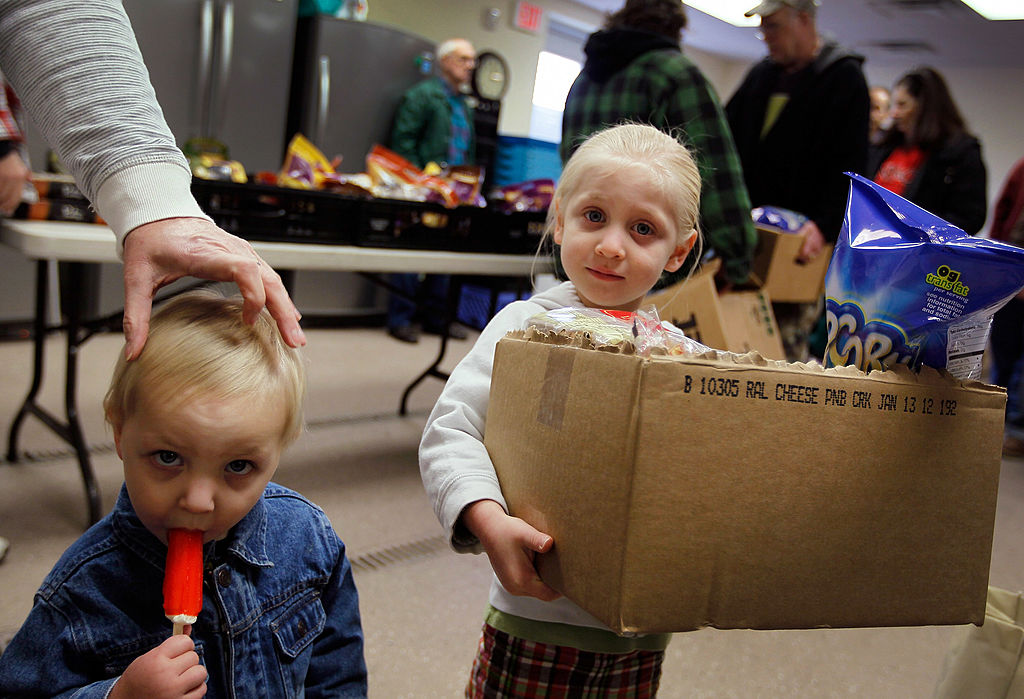
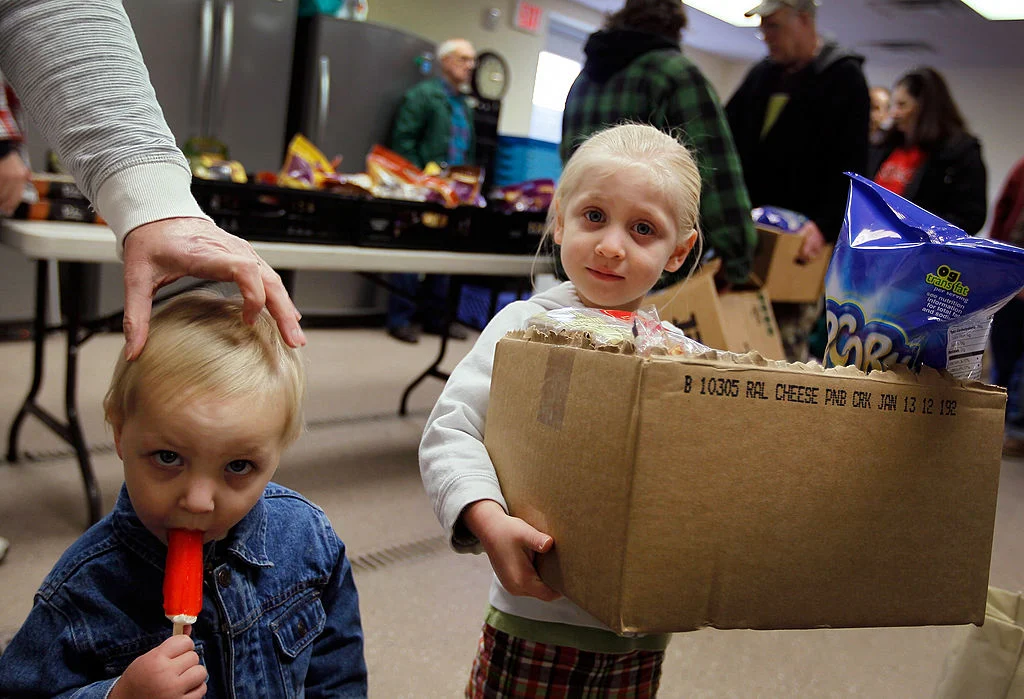
Two children help their mother pick up food from the Sugartree Ministry food bank in Wilmington, Ohio. (Photo by Joe Raedle/Getty Images)
The Ohio Department of Job and Family Services on April 30 notified 12,988 people that their federal nutrition assistance will end because they hadn’t complied with new requirements under the One Big Beautiful Bill Act. The law was passed last summer by congressional Republicans and signed by President Donald Trump.
The terminations come after 80,000 Ohioans lost benefits between the July passage of the law and January of this year. An advocacy group said it’s likely that older Ohioans are likely the hardest hit by the latest cuts.
The new requirements were imposed as part of a Trump law that cut federal nutrition and healthcare benefits by more than $1 trillion over 10 years while cutting taxes on the richest 1% of Americans by a similar amount. It also added more than $4 trillion to the federal deficit.
A large portion of the cuts to programs for the poor are being done through new work requirements.
While similar requirements for Medicaid don’t take effect until after the November midterm elections, the requirements to get benefits under the Supplemental Nutrition Assistance Program, or SNAP, took effect on Feb. 1.
“Under the new law, adults ages 55 to 64 and parents with children 14-18, as well as veterans, homeless individuals, and individuals aging out of the foster system are no longer exempted from work requirements,” Tom Betti, a spokesman for the Ohio Department of Job and Family Services, said in an email.
“These generally require working at least 80 hours per month or pursuing certain educational or training opportunities.”
About 1.4 million Ohioans receive benefits under SNAP, which is available to households with incomes below 130% of the federal poverty level.
In Ohio, that’s less than $36,000. Benefits are just $6.28 per person, per day.
Even before the cuts, the benefits weren’t reaching many eligible residents.
In Ohio in 2023, SNAP benefits were going to 95.5% of people at 100% of the federal poverty level — even though everybody making 130% or less was eligible.
But penetration of the benefit is declining further under the new requirements — which ostensibly address a problem of questionable existence.
An analysis of census data by the Center on Budget and Policy Priorities shows that in 2015, more than half of able-bodied adult SNAP recipients worked in the month they received benefits. And in 89% of households with children and a non-disabled adult, someone had worked in the previous two years.
That’s not bad among people who tend to work low-wage jobs that often lack health benefits, sick days and paid leave, the analysis said.
Critics have said the work requirements weren’t imposed to put lazy people to work, but to achieve savings by hassling otherwise-eligible people off the system. Real-world experience seems to support that.
When Arkansas in 2018 experimented with Medicaid work requirements, it didn’t produce the outcome proponents said they wanted. The mandate created confusion, 18,000 residents lost coverage, and the state’s employment level was unchanged, the Urban Institute reported last year.
In Ohio, the new losses of food benefits are expected to land heaviest on people between 55 and 64, who previously were exempt from work requirements.
Policy Matters Ohio last week reported that half of the 1,350 people in Cuyahoga County losing benefits are over 55. That’s the only county it had data for, but Executive Director Hannah Halbert cited some reasons why older recipients are especially vulnerable.
“These federal changes include requiring Ohioans over the age of 54 to work, or qualify for poorly reasoned, narrow exemptions with criteria that may be difficult to prove,” she said in a written statement.
SUBSCRIBE: GET THE MORNING HEADLINES DELIVERED TO YOUR INBOX.